
Project S.E.R.V.E. Named to Forbes Accessibility 200 for Second Consecutive Year

MIAMI (May 19, 2026) — Project S.E.R.V.E., the nonprofit organization dedicated to improving the lives of injured veterans and emergency responders through student-led engineering innovation, has once again been named to the annual Forbes Accessibility 200 List, which recognizes the world’s leading impact-makers advancing accessibility and inclusion.
Now in its second year, the Forbes Accessibility 200 expanded from 100 honorees in its inaugural year to 200 organizations, companies, and innovators due to overwhelming global interest. The list recognizes leaders across sectors including mobility, education, sports and recreation, robotics, software, workplace innovation, travel, entertainment, and consumer products. Honorees this year represent 23 countries across six continents.
Project S.E.R.V.E. was recognized for its unique model that connects veterans and emergency responders living with injuries and disabling conditions with university engineering students who co-design custom assistive technologies to improve independence, mobility, recreation, and quality of life.
“To be recognized by Forbes for a second consecutive year is incredibly meaningful for our team, our university partners, and the veterans and emergency responders we serve,” said Tara Newell, Executive Director of Project S.E.R.V.E. “Accessibility innovation is ultimately about people. Every project we support starts with listening to someone’s lived experience and working alongside them to create something practical, personal, and empowering. We’re honored to be included among so many organizations helping shape the future of accessibility around the world.”
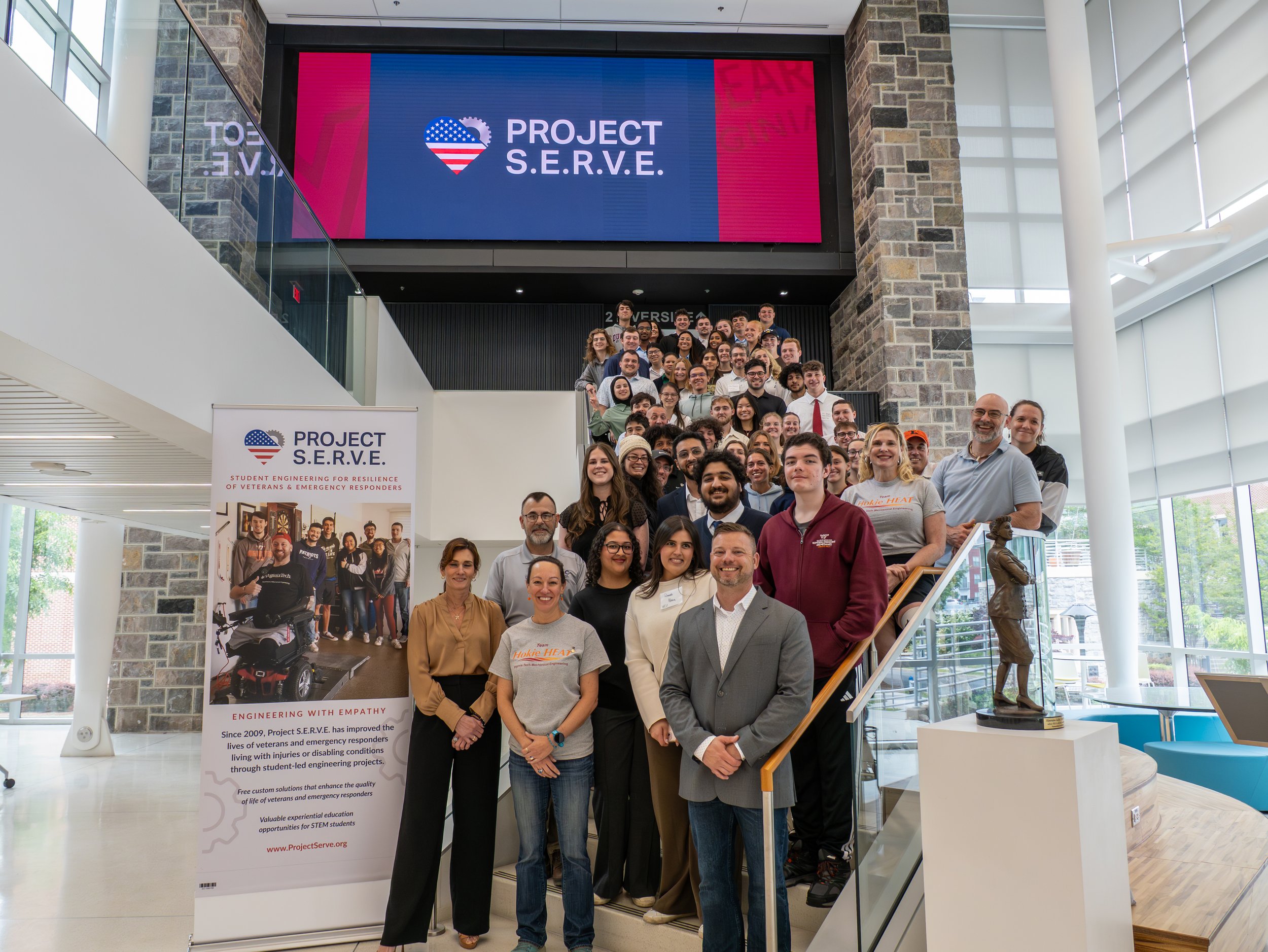
Since its founding, Project S.E.R.V.E. has engaged more than 2,000 engineering students nationwide to create over 1,300 custom assistive devices for injured veterans and emergency responders at no cost to the recipient.
Recent highlights from the organization include:
Hosting the 2026 National Design Competition in partnership with Virginia Tech, where university engineering teams developed adaptive technologies for Team USA para bobsled and para skeleton athletes.
A custom adaptive golf prosthetic developed by students from George Washington University for retired Army Col. Paul Sturm, helping restore his ability to return to the game following injury.
An adaptive cart and dog harness developed by students from Colorado School of Mines for Navy veteran MaryRita Emmerick, helping improve independence 31`and mobility through a custom-engineered solution tailored to her daily needs.
“Accessibility has evolved from a legal mandate to a bustling frontier of innovation, impact and profit,” said Alan Schwarz, Forbes Assistant Managing Editor. “From juggernaut companies to lone entrepreneurs, accessibility innovation inspires new features, products and services that transform how people with disabilities – and often the wider world – communicate, travel, learn, work, play sports, and so much more. It’s now beyond ‘the right thing to do’ – it’s integral to a smart business.”
The 2026 Forbes Accessibility 200 was compiled with the assistance of a 12-member expert advisory board from around the world.
See the full Forbes Accessibility 200 list at www.forbes.com/lists/accessibility.
About Project S.E.R.V.E.
Project S.E.R.V.E. (Student Engineering for Resilience of Veterans and Emergency Responders), is a 501(c)(3) nonprofit organization dedicated to improving the lives of veterans and emergency responders living with injuries or disabling conditions through innovative, custom-engineered solutions. By partnering with leading student engineering programs, Project S.E.R.V.E. empowers the next generation of engineers to create life-changing assistive technology for those who have served. Learn more atwww.ProjectServe.org.
