Project S.E.R.V.E. Announces Winners of 2026 National Design Competition
George Mason University takes first place for warming device designed for Team USA para bobsled athlete
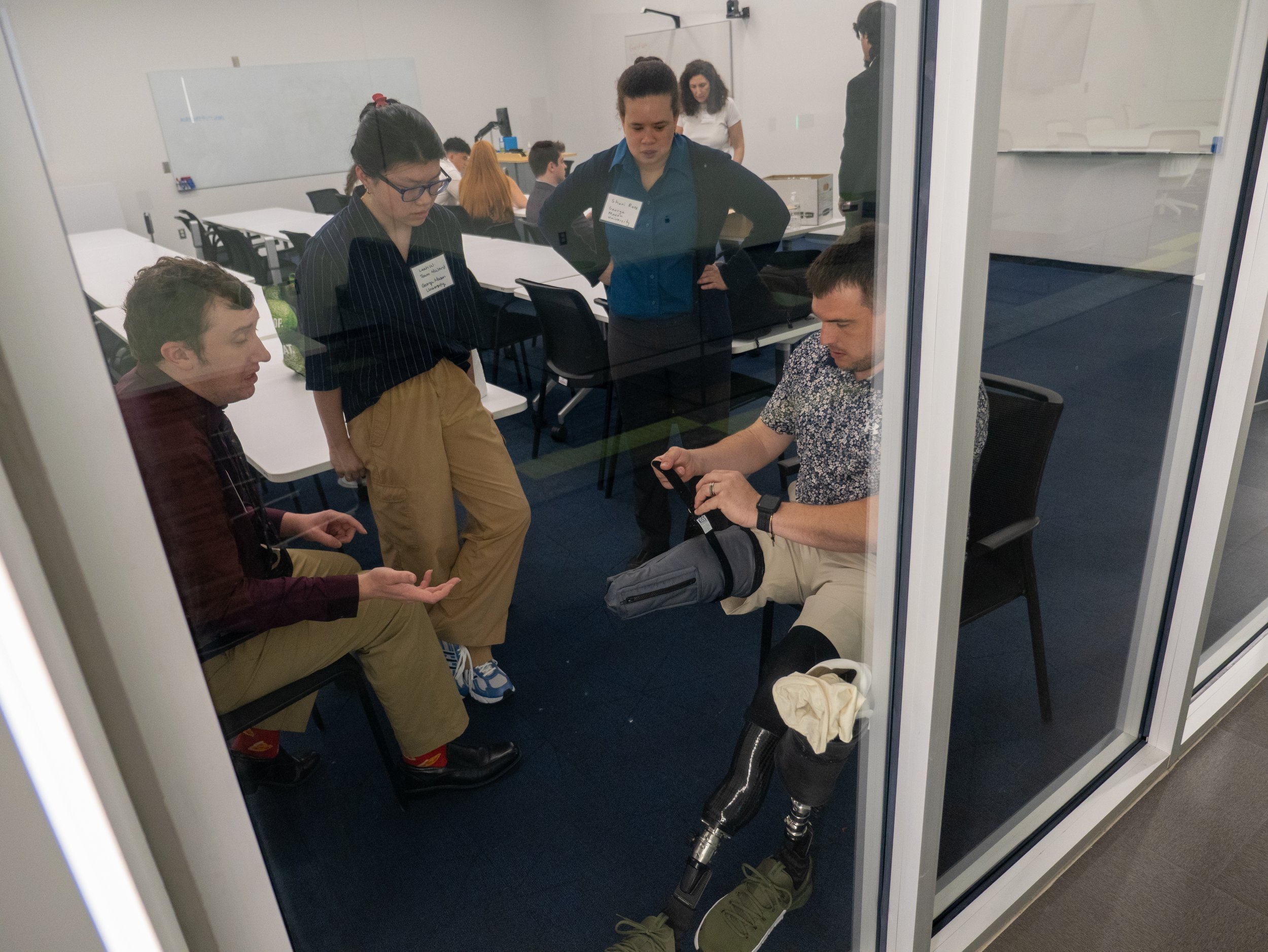
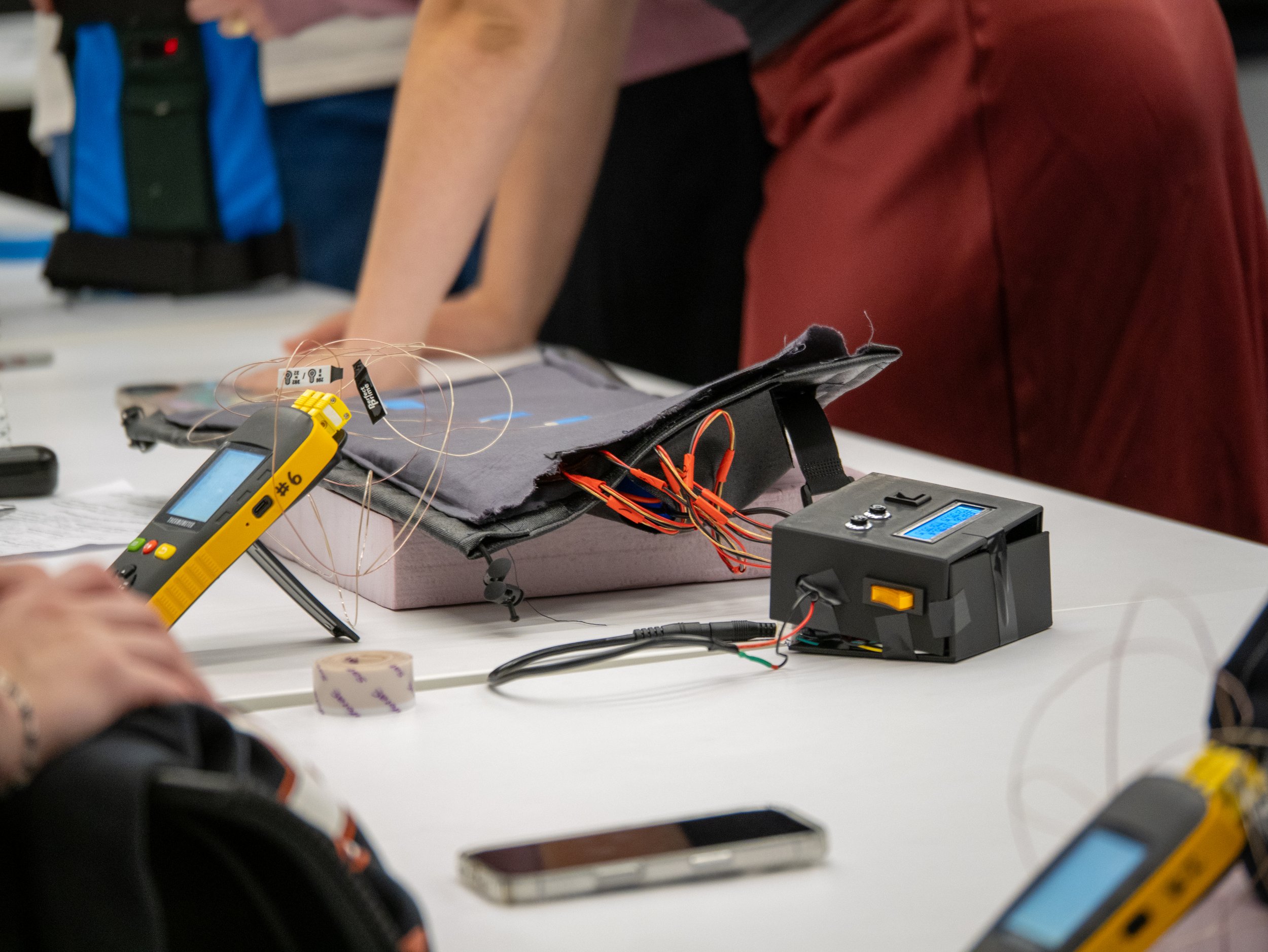
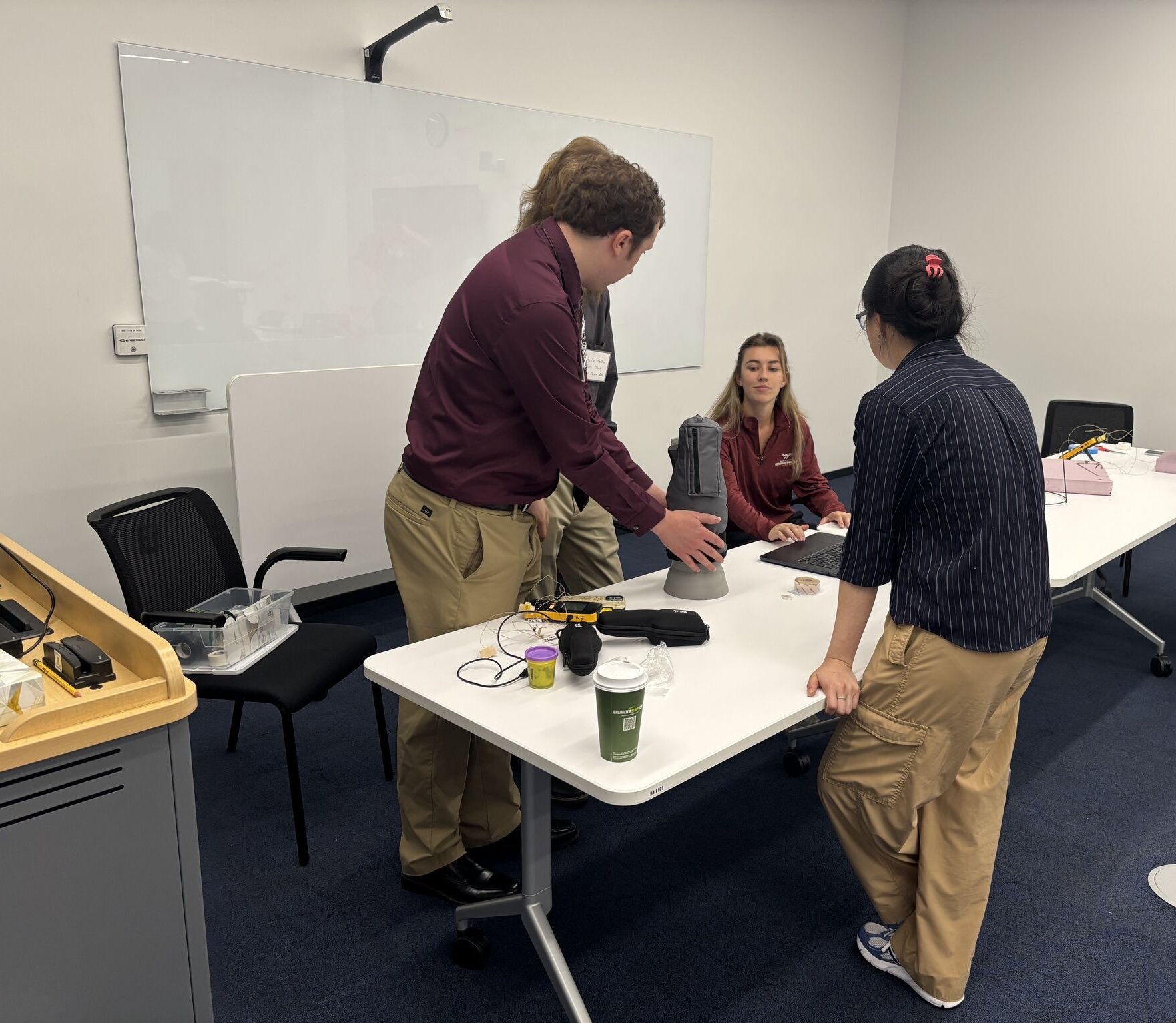
Leah Werme, Dan Rizzieri, Shani Ross & Jacob Lockey testing the warming device
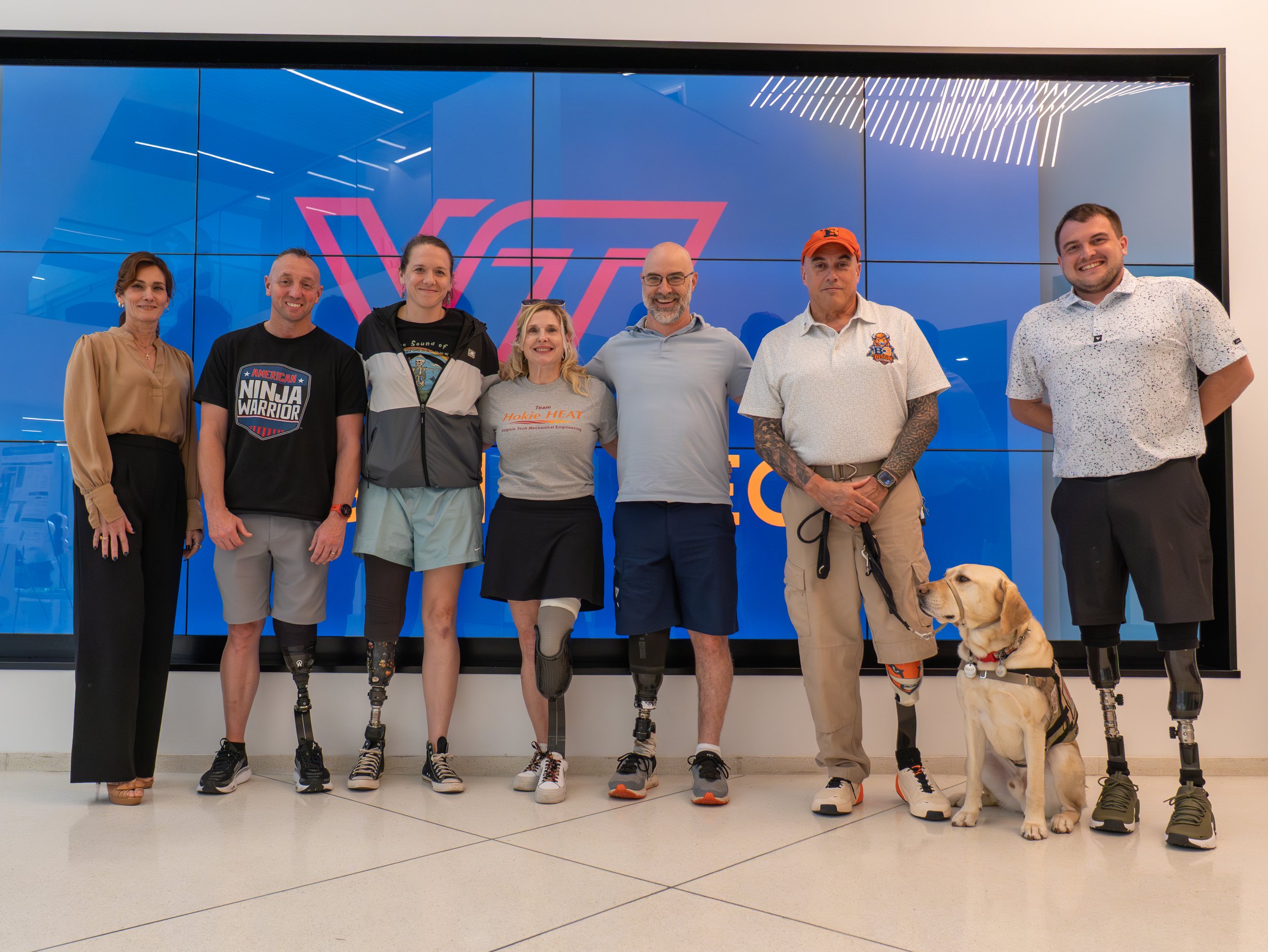
ROANOKE, Va. (April 30, 2026) — Project S.E.R.V.E. announced the winners of its 2026 National Design Competition, sponsored by PenFed Credit Union and held in partnership with the Virginia Tech Department of Biomedical Engineering. The annual event, now in its third year, brought together engineering students from 11 universities across the country to design custom adaptive devices for injured veterans on Team USA’s para bobsled and para skeleton teams.
This year’s first-place award went to George Mason University’s “Team 4ward” for developing an innovative residual limb warming sleeve for Team USA para bobsled athlete Dan Rizzieri. The student team consisted of seniors Jacob Lockey, Leah Werme, Aidan Zentner and Subhi Mekki. Second place was awarded to the Virginia Tech Department of Mechanical Engineering team, with the Virginia Commonwealth University team earning third place.
“Our National Design Competition represents the very best of what Project S.E.R.V.E. stands for: pairing talented student engineers with real people facing real challenges and creating solutions that can immediately improve lives,” said Tara Newell, Executive Director of Project S.E.R.V.E. “This year’s teams delivered creativity, compassion and technical excellence, and we are proud to help bring these innovations to veterans, responders, and adaptive athletes, who deserve them.”
The winning device has a multilayered design with reusable chemical heat packs to provide safe, consistent warmth without relying on batteries or electronics. It has a water-resistant outer layer, insulating inside, and soft skin-safe liner. A key feature is the easy-access pockets for holding heat packs, which can be easily used one-handed.
Rizzieri, a double below-knee amputee born with fibular hemimelia, has competed internationally in para sports for more than a decade.
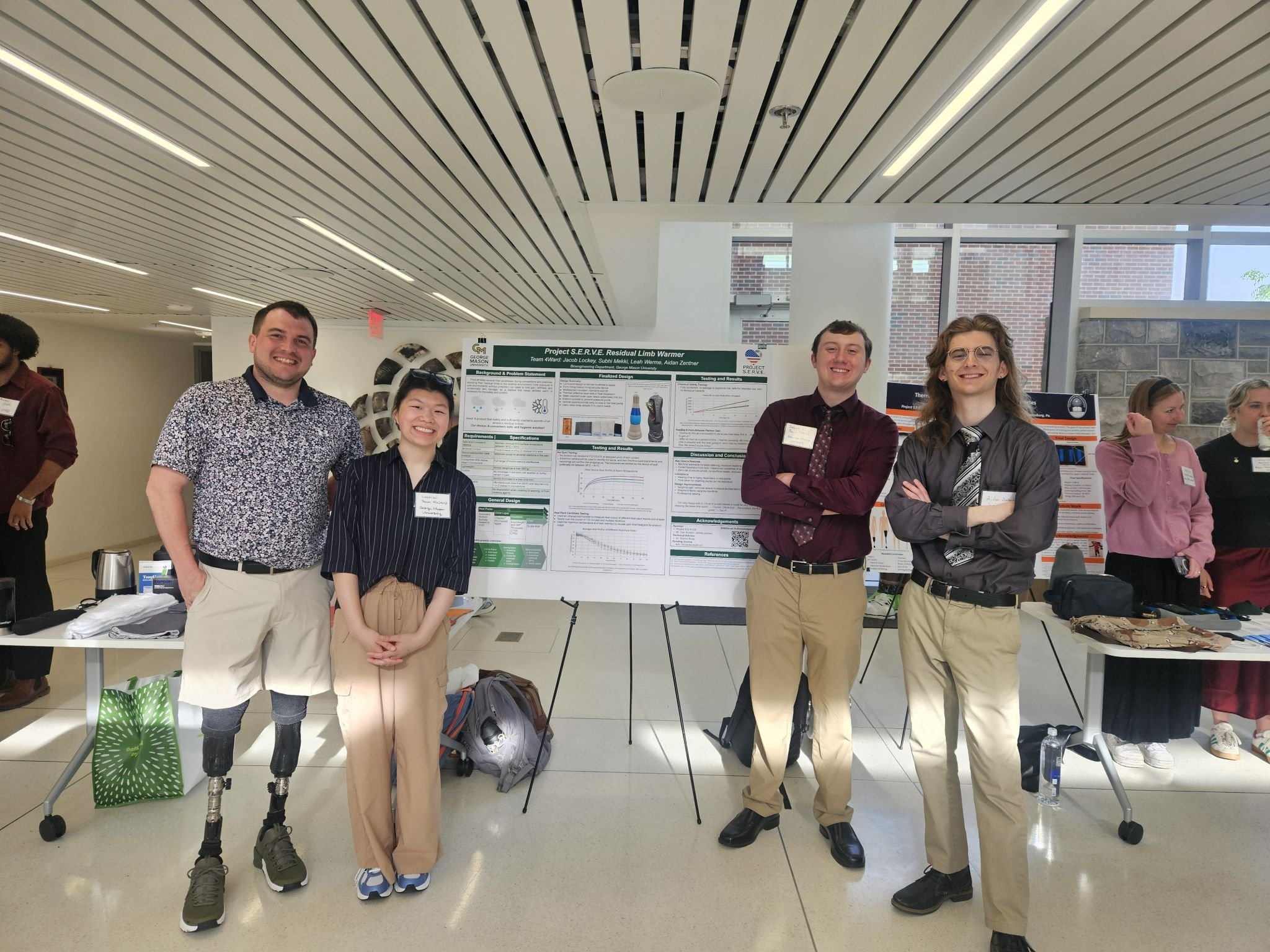
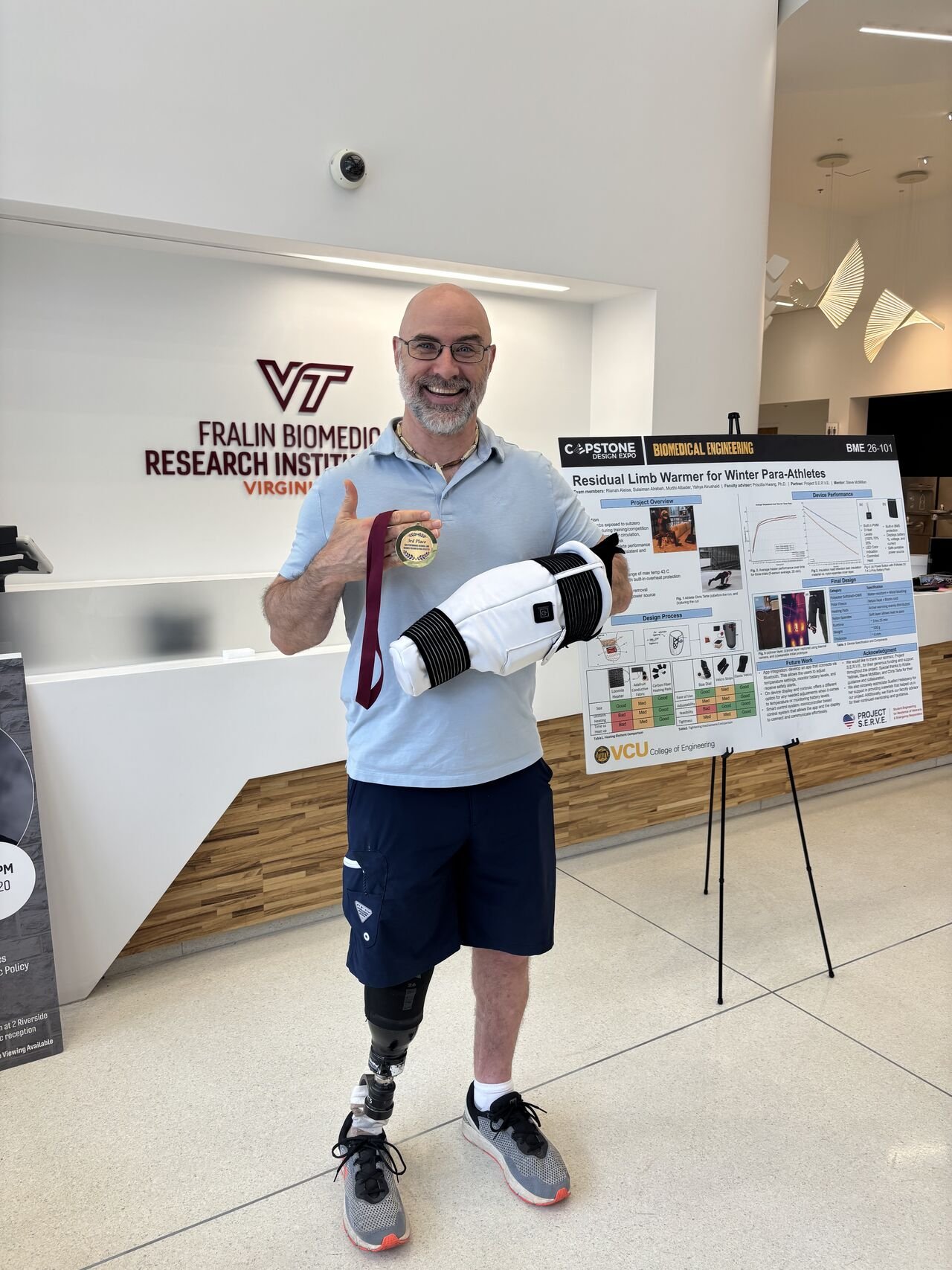
Dan Rizzieri, Jacob Lockey, Leah Werme & Aidan Zentner at the National Design Competition | Photo Credit: Leah Werme via LinkedIn
“For years, competing in the cold meant simply toughing it out," said Dan Rizzieri. 'When my legs got cold, there wasn’t much I could do except wait until practice or competition ended and then deal with the pain of warming back up. This project means so much because it gives para-athletes like me a chance to perform at our full potential with equipment designed for our real needs.
Working with the George Mason students exceeded everything I expected — they included me in every step of the process and truly cared about helping me
and others. I was incredibly proud to see them win, and this device will absolutely be part of my gear for future practices and competitions."
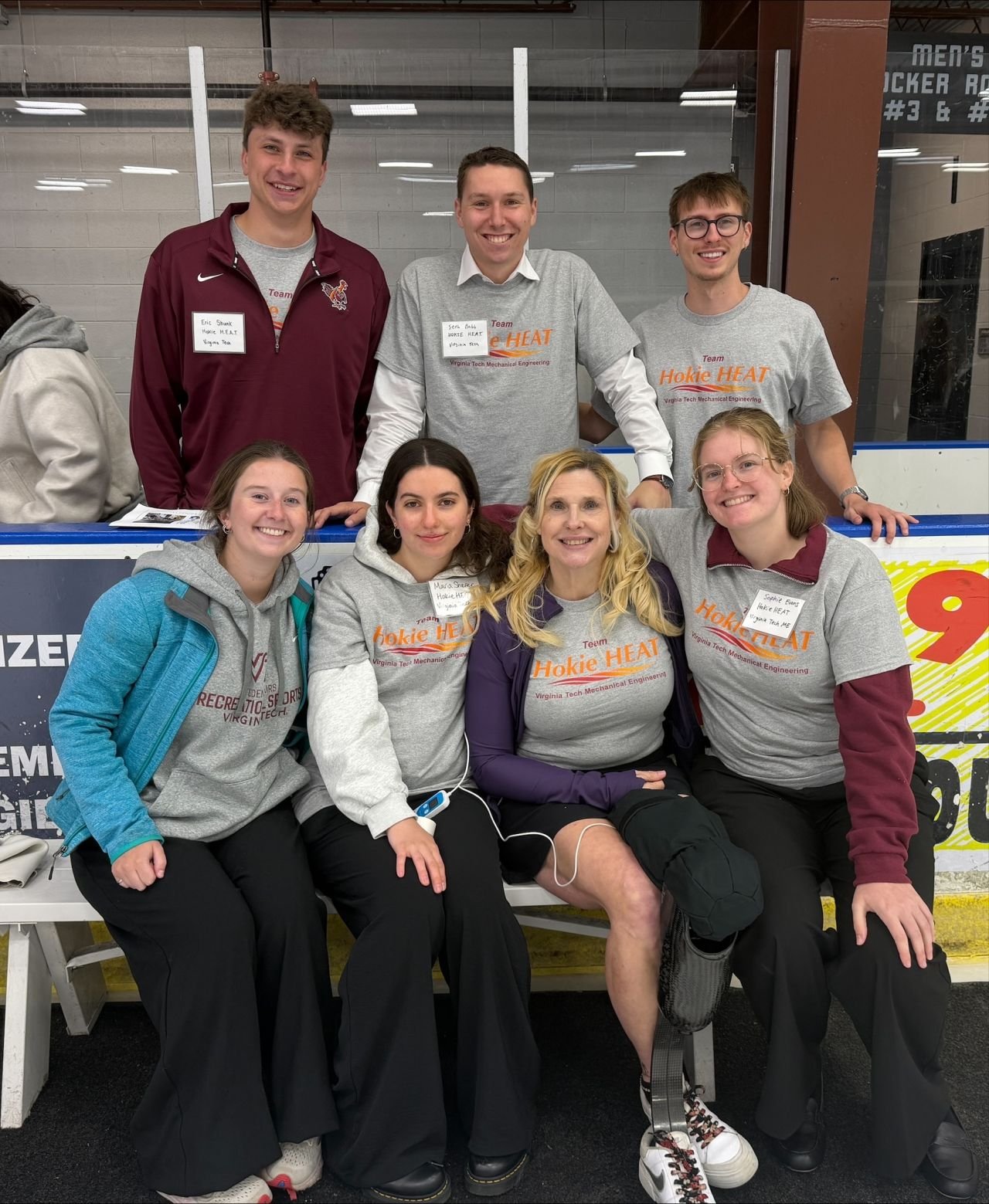
Two veteran mentors involved in the competition shared similar experiences working alongside student teams and testing these devices in real-world conditions. Among them was USAF Major Lee Kuxhaus, a below-the-knee amputee and para skeleton athlete who partnered with the students on the runner-up team at the Virginia Tech Department of Mechanical Engineering.
“I knew working with the team of mechanical engineering students from Virginia Tech would be fun, but I continued to be amazed at the dedication they demonstrated to designing and building a safe, robust product that is easily adjusted so it can be used by other amputees,” said Kuxhaus. “While the challenge we gave these students was to devise a limb warmer for para sport, it quickly became apparent what they were designing would be useful to me outside of sport. This device will be so helpful during those times when I get chilled and I can’t seem to warm my residual limb like I can warm the rest of my body. I am so proud to have been their athlete mentor for this project. They are ready for their next adventure!”
Chris Tarte, U.S. Army (Ret.), who partnered with the third place Virginia Commonwealth University team, also highlighted the physical demands of competing in extreme cold and the importance of solutions designed with direct athlete input.
“Operating in the cold for a sport can be troubling sometimes due to the extreme temperatures and wind causing various pain issues,” said Tarte. “Sometimes you have to stand out in freezing weather for a few minutes while you're waiting your turn, or hopping on one leg on ice spikes when you finish your run at the bottom of the track while the wind is biting at you. Working with Virginia Commonwealth University students for this prototype residual limb warmer was amazing. They treated me with the utmost respect, considering everything I discussed with them and incorporating my advice into the product. They made it simple for anyone to use, developing novel and breakthrough ideas for future use for people of all shapes, sizes and disabilities. It's one of the highlights of my career, and I appreciate everything Project S.E.R.V.E. and the VCU team has given me. This device will absolutely travel with me everywhere I go during the winter.”
During winter sliding sports such as para bobsled and para skeleton, athletes often remove prosthetics during training and competition, leaving residual limbs vulnerable to cold, stiffness and potential injury. Student teams were challenged to develop a lightweight, comfortable warming system that would help athletes stay warm between and during runs without interfering with movement or equipment. More than a classroom exercise, the competition paired teams directly with para-athlete mentors recruited by Kim Seevers, Chair of the USA Para Sliding Development Committee. Designs were evaluated not only for innovation, but also for practicality, safety and the ability to serve a range of limb types, including arm, above-the-knee and below-the-knee amputations.
Each athlete mentor is eligible to receive the device created for them, and the winning design may be considered for use during official Team USA training and competition, including international events. Members of the winning team said the project demanded both technical rigor and personal commitment.
“The work on this project was difficult and definitely came with many sleepless nights, but I am honored to have been surrounded and supported by so many brilliant people,” said Jacob Lockey, a member of the winning George Mason team.
“Everyone seemed to love our heatpack application and the data was there to back up our design approach,” said Aidan Zentner, also on Team 4ward.
“We’re excited to give Dan his device so he can actually use it while he’s bobsledding,” added Leah Werme.
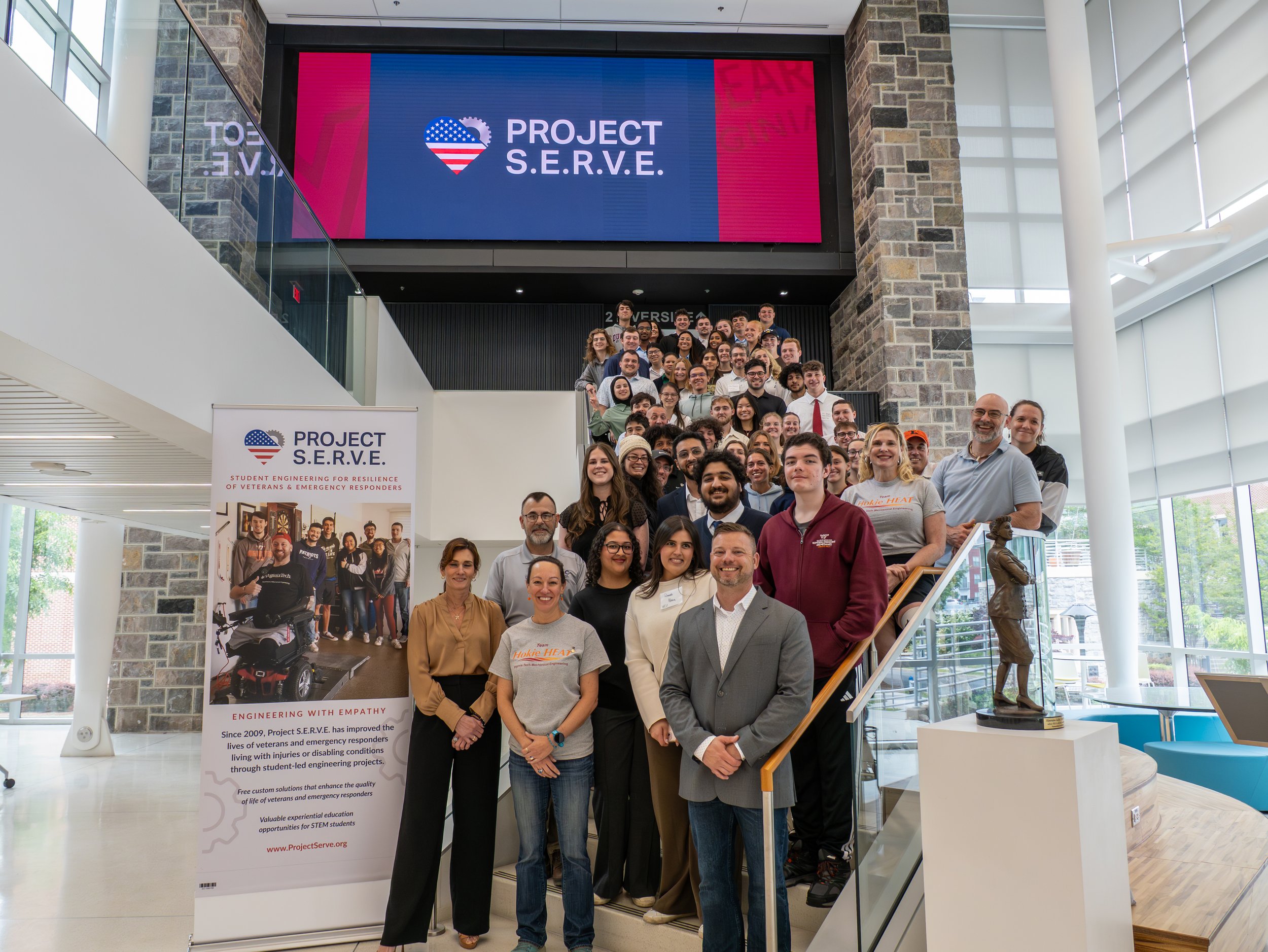
The 2026 competition featured 11 teams from 10 universities nationwide, with students presenting prototypes, conducting live demonstrations and undergoing evaluation by a panel of judges from engineering, adaptive sports and industry backgrounds.
Project S.E.R.V.E. is currently seeking sponsors for the 2027 National Design Competition. To learn more, visit: https://projectserve.org/design-competition-sponsorships
About Project S.E.R.V.E.
Project S.E.R.V.E. (Student Engineering for Resilience of Veterans and Emergency Responders), formerly known as QL Plus, is a 501(c)(3) nonprofit organization dedicated to improving the lives of veterans and emergency responders with injuries or disabling conditions through innovative, custom-engineered solutions. By partnering with leading student engineering programs, Project S.E.R.V.E. empowers the next generation of engineers to create life-changing assistive technology for those who have served. Learn more at www.ProjectServe.org.