
This Holiday Season, Engineering Empathy Changed Lives
As the year comes to a close, we’re taking a moment to reflect on what makes Project S.E.R.V.E. possible: a community of veterans, emergency responders, students, educators, donors, and partners united by a shared belief that service doesn’t end with a uniform — and that engineering can be a powerful force for good.
This year, that belief came to life in workshops, classrooms, design labs, and testing fields across the country.
Through Project S.E.R.V.E., student engineers partnered directly with veterans and emergency responders to design adaptive solutions rooted in real-world experience. These weren’t hypothetical assignments or classroom exercises. They were deeply human collaborations shaped by lived experience, mutual respect, and a shared goal: restoring independence, performance, and quality of life.
A Year Defined by Impact
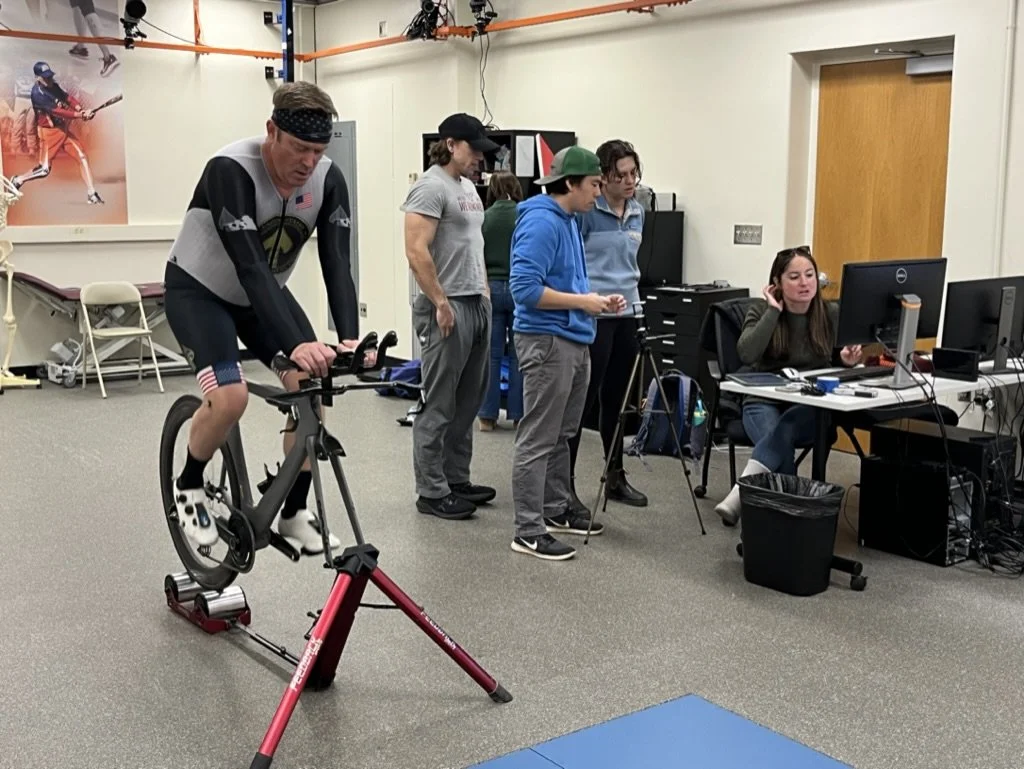
(MSgt Francis “Frankie” Reilly visiting Virginia Tech)
Just last month, a United States Air Force veteran, MSgt Francis “Frankie” Reilly, visited Virginia Tech so a Project S.E.R.V.E. student team could capture detailed movement and cycling assessments for a custom adaptive leg brace, designed specifically for his biomechanics.
Frankie served 24 years as a U.S. Air Force Pararescueman, deploying around the world to save lives. After a catastrophic knee injury during a training jump, he endured years of surgeries and rehabilitation. Today, he competes for Team USA, has earned multiple Warrior Games medals, and is a multi-year Florida state paracycling champion.
For Frankie, cycling isn’t just a sport. It’s physical therapy, mental resilience, and a return to purpose. But the braces available to him today are built for running, not cycling. They restrict motion, reduce power transfer, and force an unnatural gait.
Rather than designing for Frankie, students designed with him using lab-based motion analysis, direct feedback, and real-world testing to begin building a brace that allows him to ride smoothly, naturally, and without unnecessary pain.
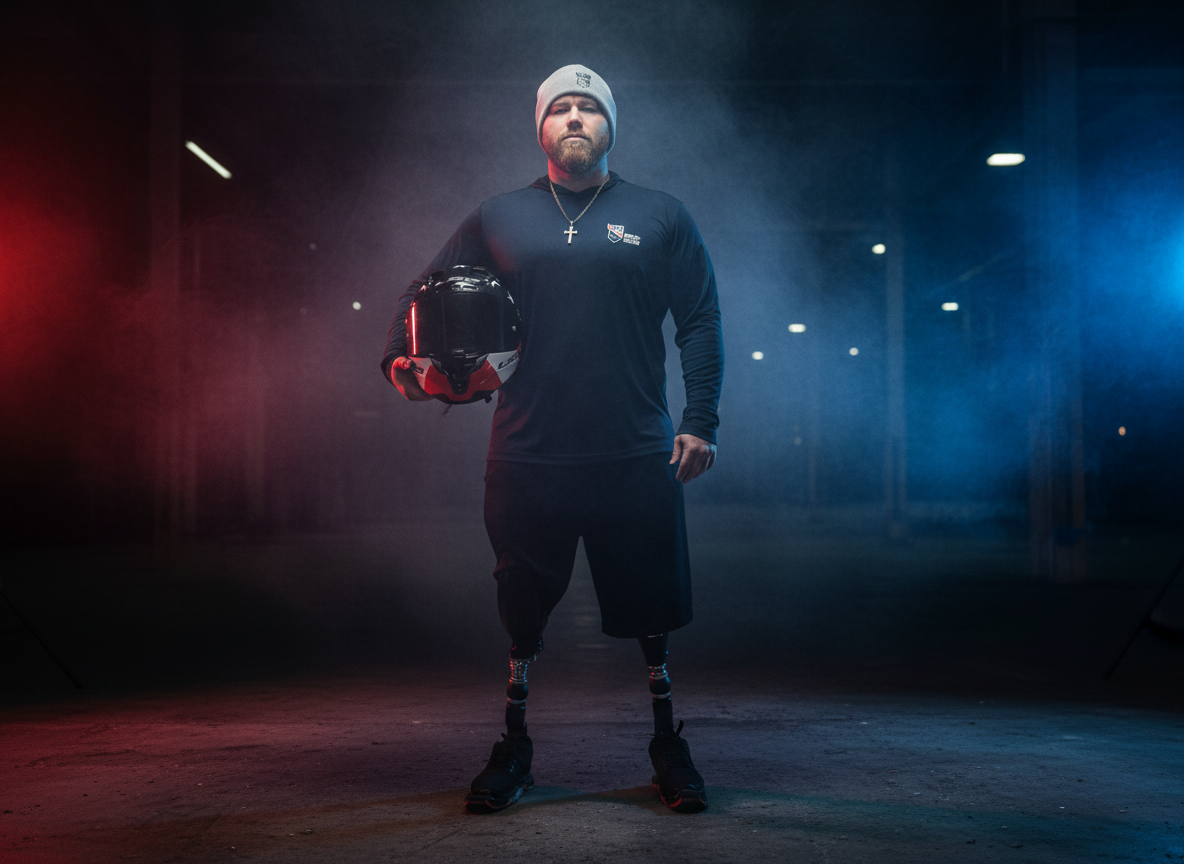
(Tyler Jeffries, U.S. Army veteran and double-leg amputee)
Across the country, similar partnerships unfolded.
Veterans and emergency responders led, mentored, and shaped each design from concept to testing. Students, in turn, gained something equally powerful: the opportunity to apply their technical skills with purpose. Many told us these projects were the most meaningful experiences of their academic careers, moments that reshaped how they think about engineering, service, and their future professions.
This year also marked another milestone for our National Design Competition, now in its third year, which brings together 56 engineering students from 12 universities across the country to solve a single, athlete-informed challenge.
In partnership with Team USA’s Para Sliding program, students are designing a high-performance residual limb warming system for winter para-athletes, many of whom remove their prosthetics during competition, leaving residual limbs vulnerable to cold, stiffness, and injury.
Veteran-athletes including Tyler Jeffries, Kevin Bittenbender, Will Castillo, Dan Rizzieri, Ivan Morera, and Dave Nichols helped shape the challenge, setting real-world performance standards and ensuring designs are evaluated not just for innovation, but for practicality, safety, and use in competition.
Gratitude for a Community That Makes It Possible
None of this happens alone.
We are deeply grateful to the veterans and emergency responders who trusted us with their stories, insights, and leadership. To the students who showed up with curiosity, humility, and determination. To the faculty and university partners who champion experiential, human-centered learning. And to our donors and sponsors, whose generosity transforms ideas into impact.
Your support funds more than projects. It creates moments of connection — between generations, disciplines, and lived experiences — that stay with people long after the project ends.
As we look toward the new year, preparations are already underway for our National Design Competition in April. This flagship program will once again challenge student teams to work alongside veteran-athletes to design high-performance solutions that meet the demands of elite training and competition.
With your continued support, we can expand participation, deepen impact, and ensure that more veterans and students have access to these transformative experiences for many years to come.
A Holiday Invitation
This holiday season, we invite you to be part of what comes next.
Your end-of-year gift helps fuel student innovation, supports veteran-led design challenges, and strengthens a growing national community committed to engineering with empathy.
From all of us at Project S.E.R.V.E., thank you for believing in this work and for making this year one to celebrate.
Happy Holidays!
