Meet the Marine Corps Veteran Whose Farm Is Shaping the Next Generation of Engineers
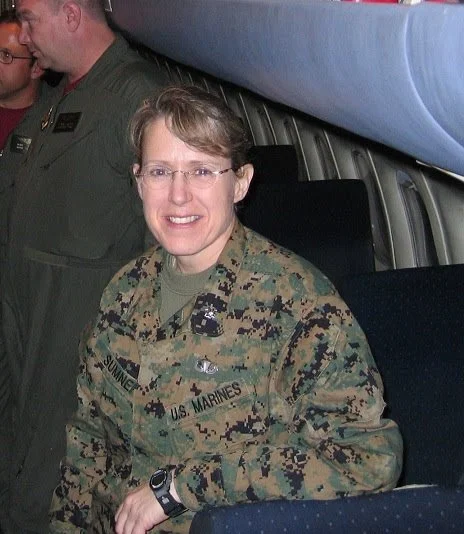
LtCol Leigh Sumner USMC (Ret)
When LtCol Leigh Sumner USMC (Ret) talks about her life after the Marine Corps, she does so with precision—about systems, constraints, and what it actually takes to keep moving forward.
She enlisted in the United States Marine Corps in 1983 and served as a Russian linguist, retiring after 23 years of active duty service at the rank of lieutenant colonel.
Her career spanned intelligence, languages, leadership roles, and four separate commands. Along the way, it also included a series of spinal injuries that would permanently shape how she navigates the world.
“I first injured my back…I had a safety line failure and fell 25ft and broke my spine,” she explained. A second spinal injury followed years later. Then, in 2023, a third complex surgery.
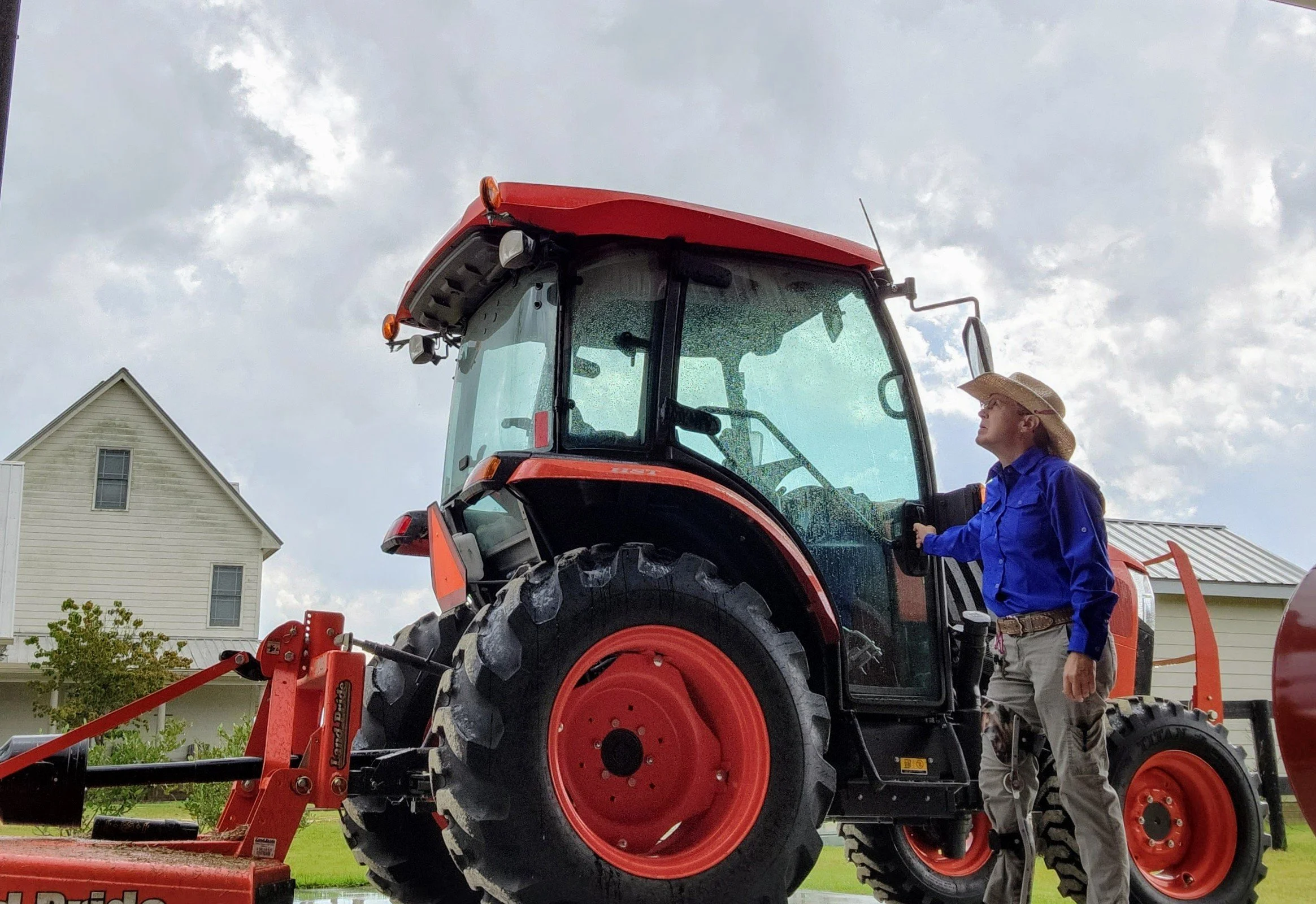
Today, Leigh lives and works on her 124-acre conservation farm, Sumner Farm, in Newton Grove, North Carolina. “I am now an adaptive conservation farmer on my own property,” she said. The work is physical, technical, and demanding—and it has to be done carefully.
That reality is what brought her to Project S.E.R.V.E.
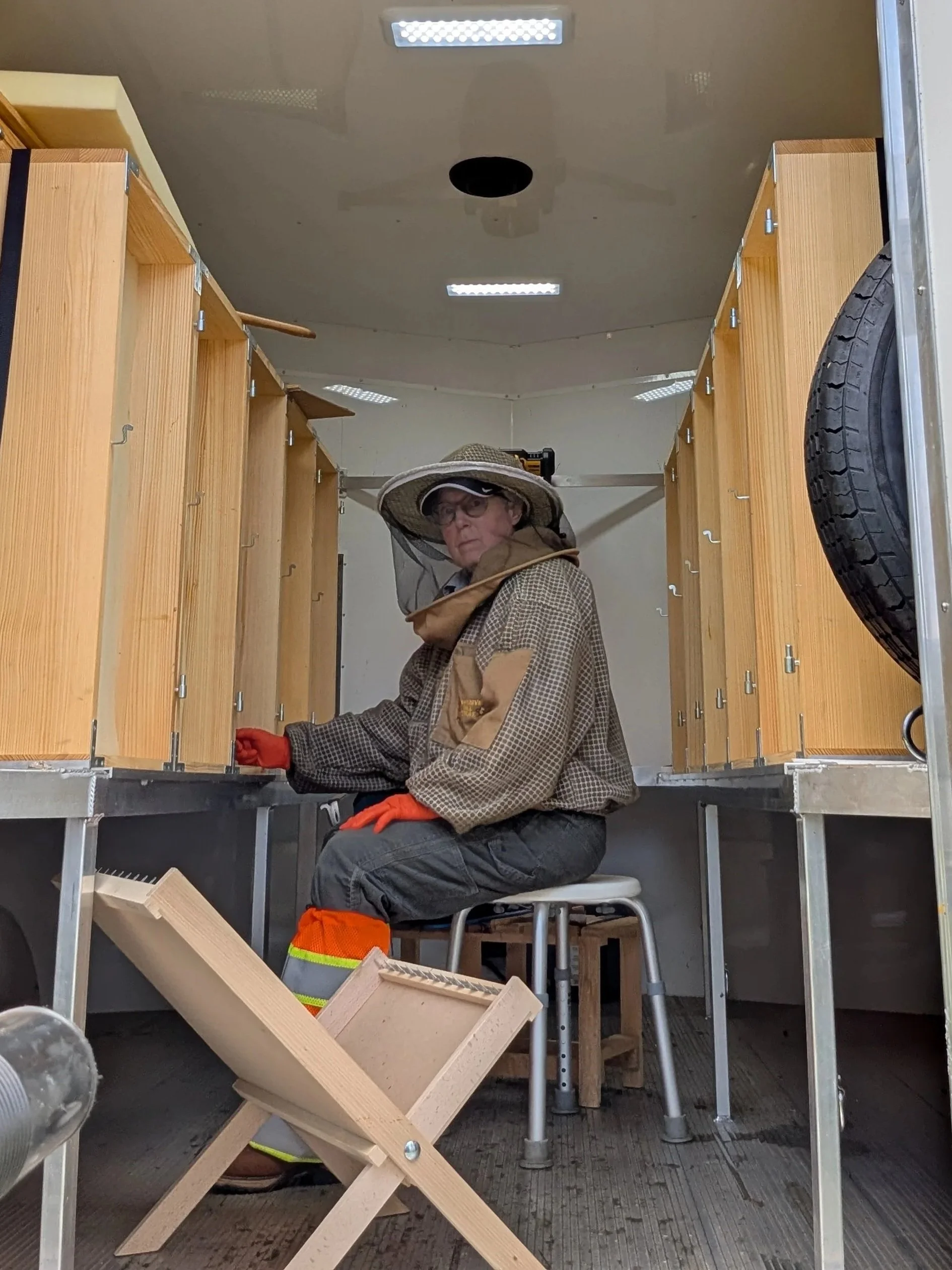
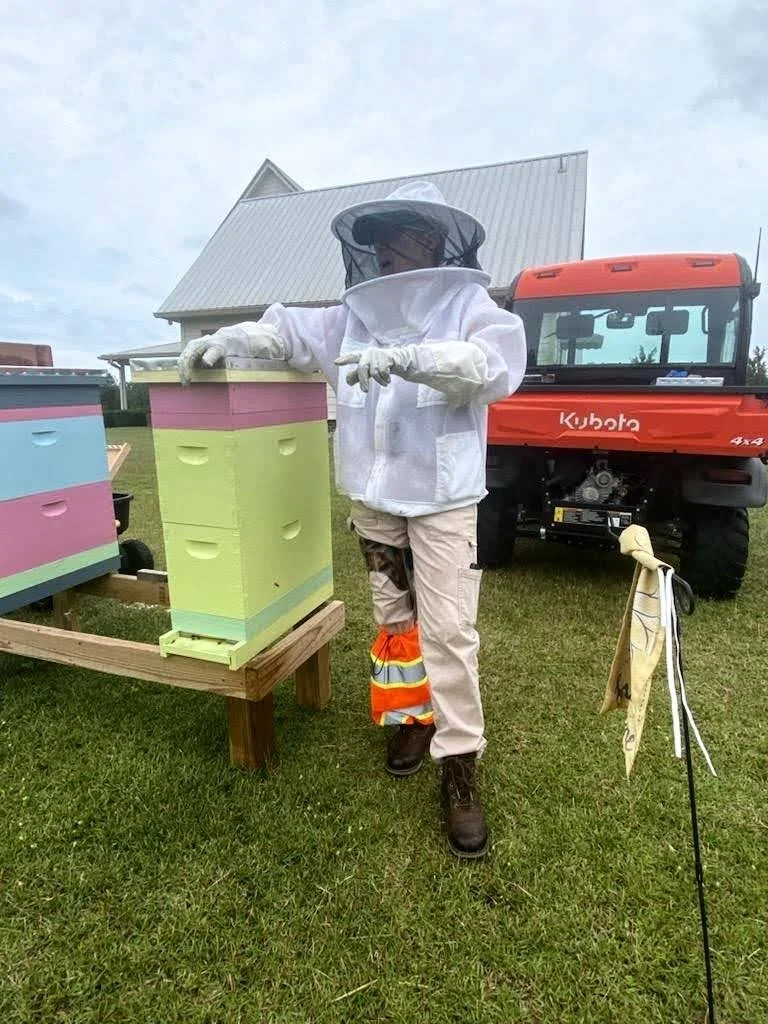
LtCol Leigh Sumner USMC (Ret) in her mobile apiary
A Simple Problem That Wasn’t Simple at All
Leigh didn’t come to Project S.E.R.V.E. looking for something novel or cutting-edge. She was looking for something that, in theory, already existed.
“I was unable to find a work stool that was the right height, that was light enough that enabled my movement more than possibly injuring me further,” she said. “I had purchased numerous stools, chairs, benches online through Amazon. None of them were the right height or they were too heavy or too broad in the base. They just simply did not work.”
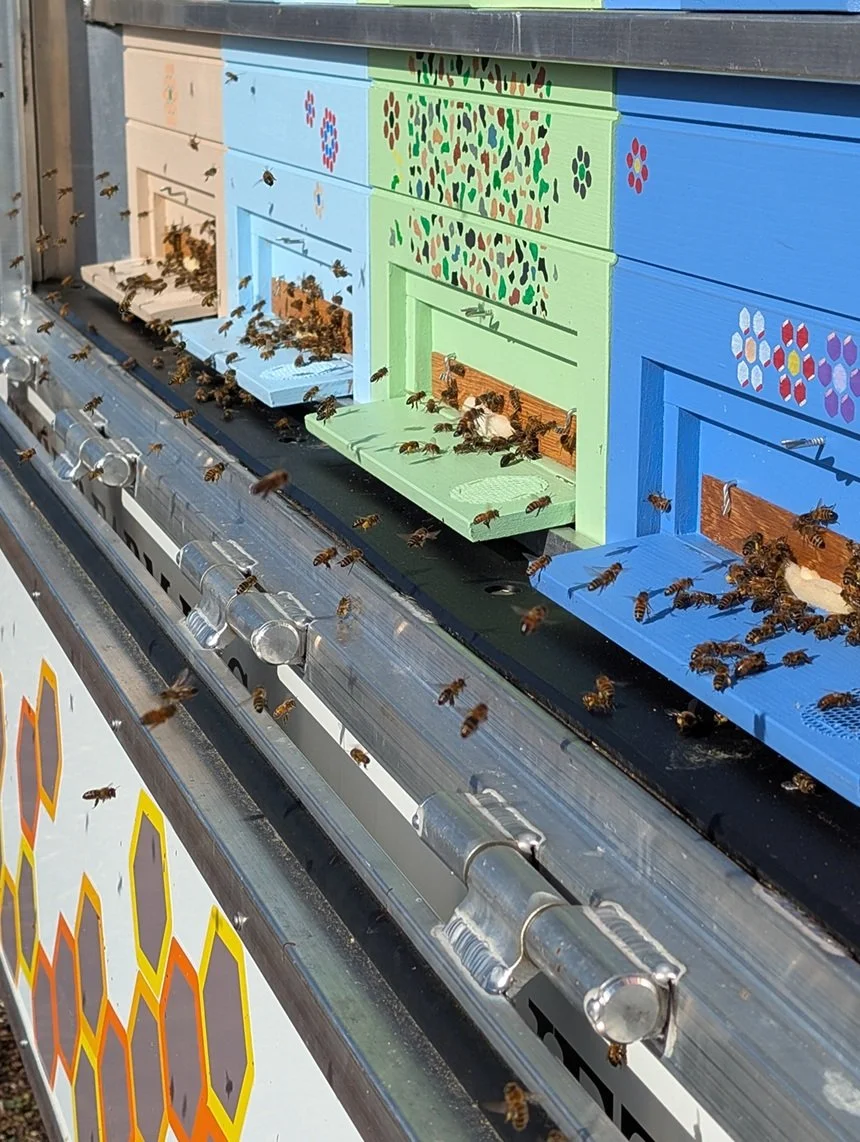
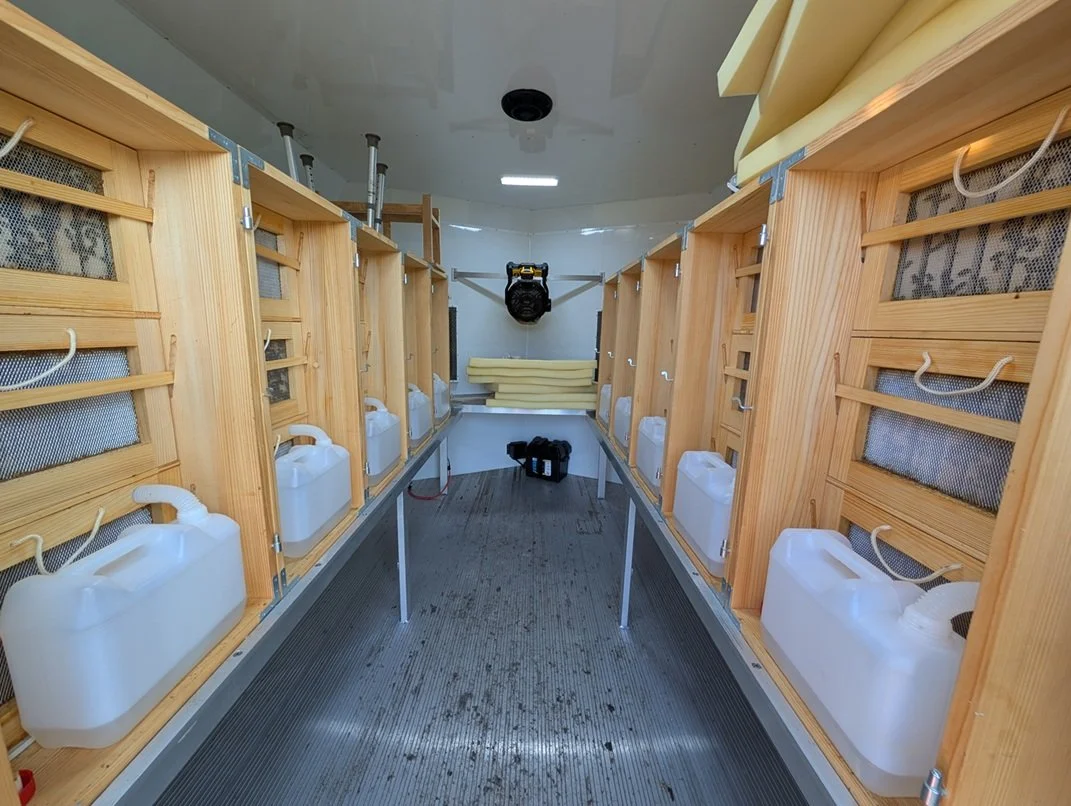
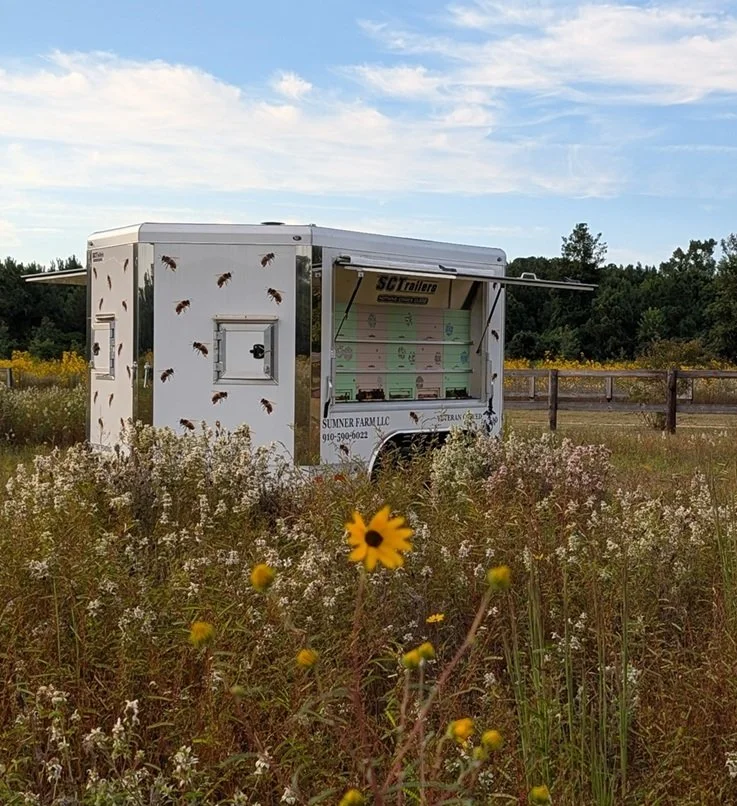
Her farm includes custom-designed mobile apiary trailers that house 30 boxes of bees, designed specifically so she can work without heavy lifting. But inside the trailers, space is tight. The stool had to be precise.
“I just need a work stool or chair that sits at 16 inches high, that is lightweight, under 15 pounds, and will not trip me,” Leigh said. “You would think you’d be able to find that, but I was not able to find it.”
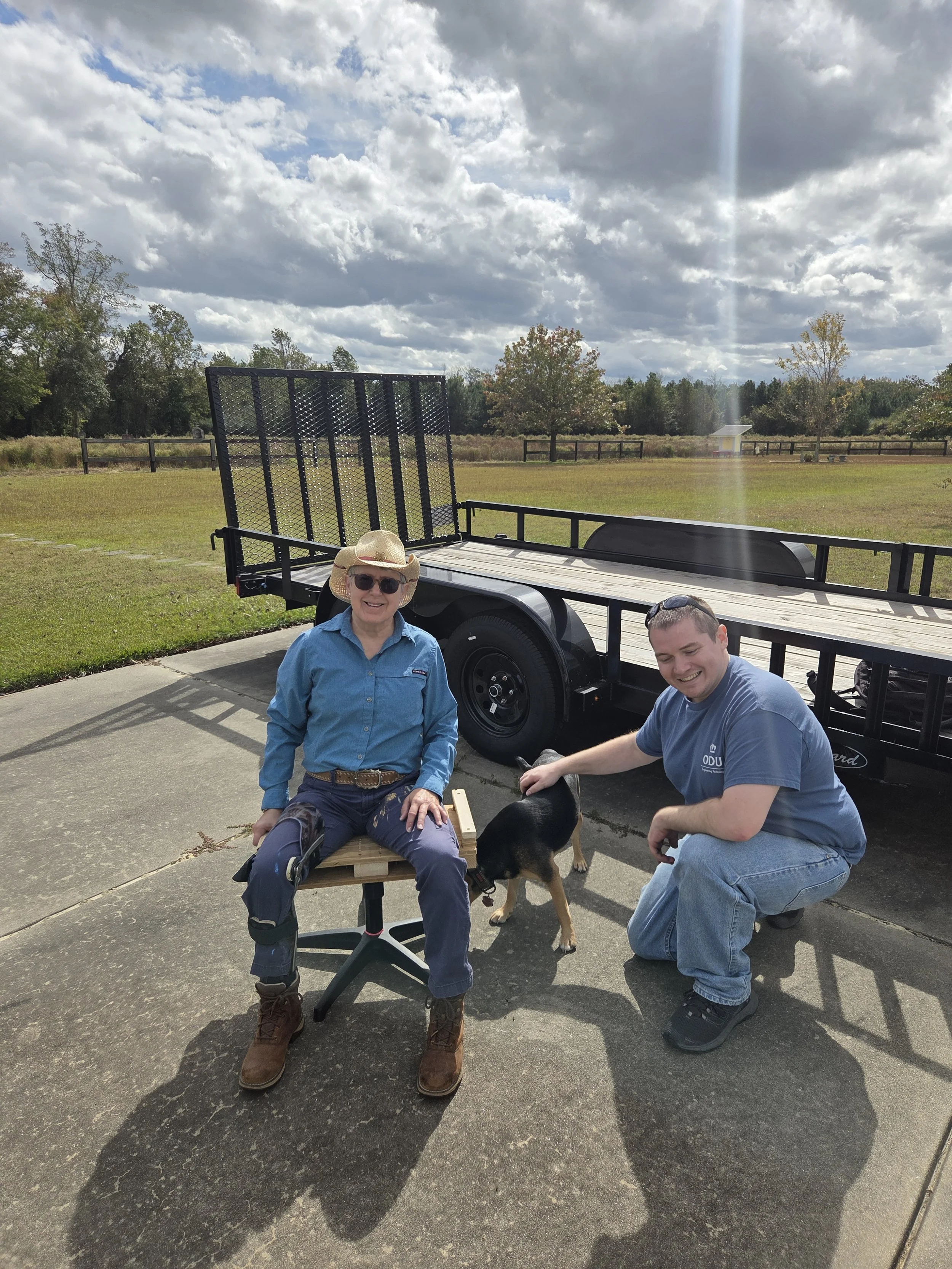
Through Project S.E.R.V.E., her request was matched with a student engineering team at Old Dominion University. Their task: design and build an adaptive stool that fits her body, her workspace, and her daily reality.
Designing With the End User in the Room
For Wesley Myers, a senior at ODU studying mechanical engineering technology and serving in the National Guard, the project quickly became more than a capstone requirement for him and his classmates.
“Our project is to build a custom stool for our veteran’s mobile apiary project,” Wesley explained. “She currently lives on her own farm and does a lot of the manual labor by herself. And due to an injury on her lower vertebrae, she has difficulty standing up and maneuvering heavy objects.”
The team didn’t rely on assumptions. They visited Leigh’s farm, walked through the trailers, and adjusted the design in real time.
“The students came down here, Wesley and Josh came down here once and saw one of the trailers to visually see where I’m working, where this stool needs to go,” Leigh said. “And then they went back to the schoolhouse and considered ways that stool might even be more beneficial to me than I had speculated or than I had asked for.”
What began as a straightforward request evolved through collaboration. “They further considered the heights I might need if I was able to lift the stool higher when I’m accessing upper levels of bee boxes,” she said.
For Leigh, success was about getting the fundamentals exactly right. “I simply wanted a reasonably comfortable stool at the proper height that weighed 15 pounds or less,” she said. “I am absolutely confident at this point that one of these prototypes, if not more than one, is going to meet my needs.”
When One Solution Leads to Another
The ODU project wasn’t the end of Leigh’s involvement with Project S.E.R.V.E. Encouraged to submit another challenge she initially thought was “too complex,” Leigh described a second barrier: connecting and disconnecting the PTO on her tractor.
“I can’t bend in that way,” she explained. “I certainly can’t hold heavy pieces of equipment and meet them together and feed them teeth to teeth and lock them with the coupler while I’m on my legs.”
Until now, the solution had been to hire help every time. Through Project S.E.R.V.E., that challenge was taken on by a student team at Virginia Tech, working on what they’ve dubbed the “Hokie Hitch.”
“They hope to be able to deliver the prototype to me… and let us try it in mid March,” Leigh said. “Every single farmer that I have spoken to about this project is excited about this project.”
What This Collaboration Makes Possible
Leigh is realistic about the barriers veterans face when adaptive solutions don’t exist off the shelf. “You have to be very determined and very persistent,” she said. “The biggest limitation might be, though, the cost.”
That’s where Project S.E.R.V.E.’s model—pairing veterans with university engineers—changes what’s possible.
“Project S.E.R.V.E. basically came to the rescue,” Leigh said. “As simple as it seems it might be, it is not. But they are going to solve this for me. I’m confident.”
For Leigh, these projects are about continuing work she cares deeply about, safely and sustainably.
“These few things would make me so much more independent, safe and capable in doing this all myself,” she said. “Making it successful and also contributing to the community at large.”